Transition to the Next Normal: Redefining Customer Experience to Changing Consumer Context

As the SARS-COV-2 pandemic continues to cause massive disruption and misery to lives and economies all over the planet, businesses are finding themselves having to adapt quickly and frequently to meet the needs of their customers.
Many parts of the world – such as the UK – are still in severe lockdown measures, while others find themselves returning to some semblance of normality. Now vaccines have been discovered and mass-vaccination programs are in full swing, the question turns to what happens next?
For almost a year now we’ve described the situation as “the new normal” and have been running our businesses accordingly. However, attention must now swivel to the “next normal” and what that means for global industry – especially when it comes to customer experience.
Changing Consumer Behavior in a Post-COVID World
It’s no secret that online shopping has seen a massive surge in popularity since the onset of the coronavirus plague. Amazon alone saw its net income increase to $6.3bn in the third quarter of 2020, compared with net income of $2.1bn in same quarter of 2019.
Clearly this makes sense during the pandemic – particularly during lockdown measures – as a lack of shopping options and an increased desire for home entertainment, exercise, etc. products drove customers to online platforms. However, it’s important to remember that the high street was already losing ground to online even before the current situation.
So, what does this mean for the consumer shopping experience after the vaccine has been rolled out completely and the worst of the danger has passed? While the assumption may be that people will stick with online and the coronavirus will prove to be the final nail in the coffin for the high street, this may not necessarily be the case. Online is almost certainly going to continue along its growth trajectory, but we maybe shouldn’t be writing our eulogy for the high street just yet.
Once people are vaccinated and shops can reopen, we are likely to see a massive surge in people wanting to return to the high street, just to experience the relative novelty of being able to shop in person again. In fact, we may see a long-term renewed desire and appreciation for high street shopping experiences thanks the pandemic as a case of “you don’t know what you’ve got until its gone” kicks in.
There is also likely to be a greater support for small businesses versus large chains. Small businesses have suffered greatly during the pandemic and one only need look at social media accounts for these retailers to see the outpouring of support and well-wishing from local people.
A 2020 survey of US shoppers found that 53% were more likely to buy from local businesses instead of national retailers during the crisis, citing support for those retailers and the local economy as their main motivating forces.
Keeping You Finger on the Pulse
While the high street may see renewed vigor in the next normal, it will still take a concerted effort to make sure customers receive the kind of experience they’re looking for and have become used to shopping online.
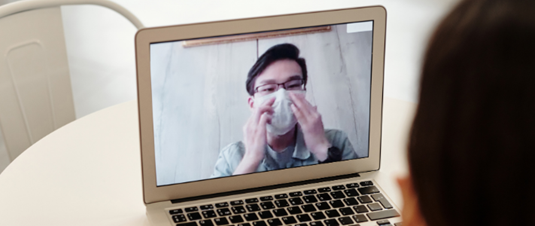
Communication will be key to this strategy and this is where digital technology steps in to support the brick-and-mortar retail experience. Businesses need to make sure they are not forgotten about once people start shopping in person again and social media will continue to be a powerful tool with which to achieve this. Social media has accounted for 66% of business communications during the pandemic and this must continue if retailers want to leverage the power of positive customer sentiment.
Social media can be used to tell the story of your business such as the challenges and triumphs it has faced during the crisis, but also to augment the experience for your customers. Run competitions and special promotions for customers who follow you on social media and then come to your shop in person. Use social media to chat with customers and assist them with everything from making the most of their products and dealing with issues and complaints and boost the customer experience significantly.
While we’re still transitioning from the new normal to the next normal, smaller businesses can take cues from their larger peers to help provide a better and safer customer experience. While we are still in the throes of the pandemic, customers are placing a greater importance on safety and security than they are on factors such as price. Services such as free delivery and curbside pickup or contactless delivery are far more important concerns right now than how much the shop costs.
However, perhaps more important than any one strategy or service, is the ability for a business, regardless of size, to be able to adapt and pivot quickly to changing circumstances. Over the last twelve months, we’ve all seen how fast things can change and businesses must always be prepared for things to get better or worse at a moment’s notice so they can continue to provide customers with an amazing experience. Cafes and other food-based businesses, for example, may want to revise their menus so they are able to effortlessly able to switch to a takeaway service, should they be forced to close to sit-in guests again at any point.
Agility has long been an important buzzword when it comes to business, but that importance has only been magnified by the coronavirus pandemic.
Final Thoughts
Many of the changes we’ve seen in customer experience during the coronavirus crisis have been things we’ve seen coming and been talking about for years now. However, the last twelve months have accelerated the onset of these changes and it’s not certain whether there is any turning back. However, there is opportunity for businesses to leverage renewed customer sentiment when it comes to retail customer experiences, if they are willing to put the effort in. By making the most of customer communication tools, increased convenience and service provision, and by placing a strong focus of agility and flexibility, even the smallest retailer can provide a superior customer experience and see themselves thrive in the next normal.